8594, Dixie Highway, Louisville, KY 40258
Plantar Warts-Causes, Symptoms, Treatment & Prevention
A small bump on the bottom of your foot may not seem like a big problem at first. However, if it becomes painful while walking or standing, it could be a plantar wart, also known as verruca. Plantar warts are one of the most common foot conditions treated by podiatrists and foot & ankle specialists. Although they are generally harmless, they can become uncomfortable, spread to other areas of the foot, and affect your daily activities if left untreated.
At Podiatry Foot & Ankle Clinic, Dr. Krishna Gathani – Expert Foot & Ankle Surgeon provides comprehensive diagnosis and personalized treatment plans for plantar warts, helping patients return to pain-free movement with confidence.
What Are Plantar Warts?
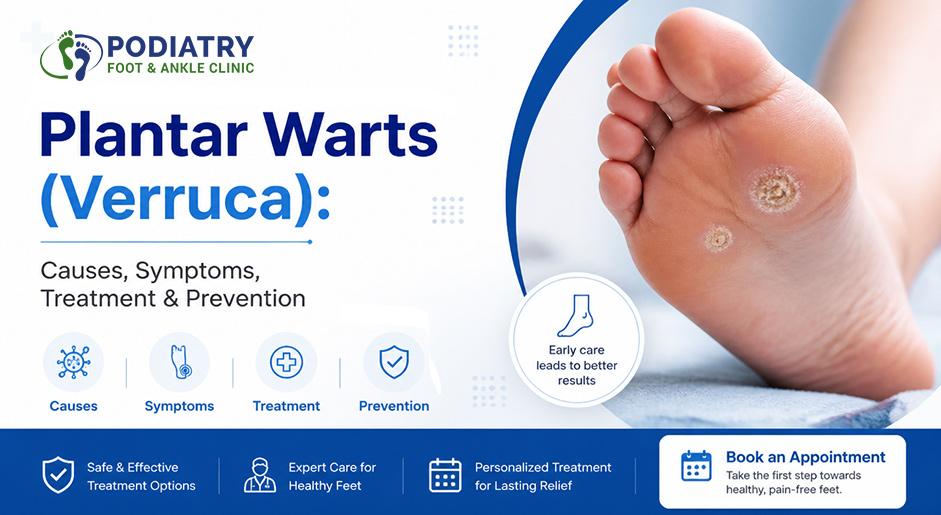
Plantar warts are small, rough growths that develop on the soles of the feet. They are caused by the Human Papillomavirus (HPV), which enters the skin through tiny cuts, cracks, or weak areas. Since the soles of the feet constantly experience pressure from walking and standing, plantar warts often grow inward rather than outward, making them painful.
Unlike calluses or corns, plantar warts are caused by a viral infection and may spread to nearby skin or even to other people through direct contact.
What Causes Plantar Warts?
The main cause of plantar warts is infection with certain strains of the Human Papillomavirus (HPV). The virus thrives in warm, moist environments and can enter the skin through small openings that are often too tiny to notice.
You may be at a higher risk of developing plantar warts if you frequently:
- Walk barefoot around swimming pools
- Use public locker rooms
- Shower in shared facilities
- Walk barefoot in gyms or communal areas
Not everyone exposed to HPV develops a wart. Your immune system plays an important role in determining whether the virus causes an infection.
Common Signs and Symptoms of Plantar Warts
Recognizing the early signs of a plantar wart can help you seek treatment before it becomes more painful.
Common symptoms include:
Rough, Thickened Skin – Plantar warts usually appear as rough, hardened patches of skin on the sole of the foot. They are often mistaken for calluses because of their thick surface.
Pain When Walking or Squeezing – Unlike a callus, a plantar wart often causes pain when pressure is applied from the sides or while walking. Many patients describe the feeling as though they are stepping on a small pebble.
Tiny Black Dots – One of the most recognizable signs of a plantar wart is the presence of tiny black dots. These are actually small clotted blood vessels and are commonly referred to as “wart seeds.”
Interrupted Skin Lines – Healthy skin has natural lines and patterns. Plantar warts disrupt these skin lines, which helps doctors distinguish them from other foot conditions.
Are Plantar Warts Contagious?
Yes. Plantar warts can spread through direct or indirect contact with the virus. Walking barefoot in shared public areas increases the chance of both catching and spreading HPV.
The virus is more likely to infect skin that has tiny cuts, blisters, or excessive moisture. Although plantar warts are contagious, they are generally not highly infectious, and not everyone exposed to the virus develops one.
The best treatment depends on the size, location, number of warts, and your overall health. At Podiatry Foot & Ankle Clinic, treatment is tailored to each patient’s individual needs.
Salicylic Acid Therapy – Salicylic acid is one of the most commonly recommended treatments for plantar warts. It gradually softens and removes infected skin over several weeks. Consistent use is important for successful results.
Debridement – Debridement involves carefully removing the thick, dead skin covering the wart. This helps reduce discomfort and allows topical treatments to penetrate deeper into the infected tissue, improving their effectiveness.
Cryotherapy – Cryotherapy uses liquid nitrogen to freeze the wart tissue. The frozen tissue gradually dies and falls away, allowing healthy skin to replace it. Some patients may require multiple treatment sessions for complete removal.
Cantharidin Treatment – Cantharidin is a medication applied by a healthcare professional. It creates a controlled blister beneath the wart, allowing the infected tissue to separate from healthy skin before removal.
Laser Therapy – Laser treatment targets the blood vessels that supply the wart. By cutting off its blood supply, the wart tissue gradually dies and is absorbed by the body. Laser therapy is often considered for stubborn or recurring plantar warts.
Immunotherapy – For persistent plantar warts that do not respond to conventional treatments, immunotherapy may be recommended. This approach stimulates the body’s immune system to recognize and fight the HPV virus more effectively.
How to Prevent Plantar Warts
Although plantar warts cannot always be prevented, a few simple habits can significantly reduce your risk.
- Keep your feet clean and dry.
- Wear sandals or flip-flops in public showers, pools, and locker rooms.
- Avoid walking barefoot in shared public areas.
- Do not pick, scratch, or cut a wart.
- Avoid sharing towels, socks, shoes, or foot care tools.
- Change socks regularly and wear properly fitting footwear.
Good foot hygiene not only helps prevent plantar warts but also reduces the risk of other fungal and bacterial infections.
Why Choose Dr. Krishna Gathani for Plantar Wart Treatment?
At Podiatry Foot & Ankle Clinic, patient care goes beyond simply removing a wart. Dr. Krishna Gathani carefully evaluates your condition, confirms the diagnosis, and recommends the most effective treatment plan based on your individual needs. The goal is not only to eliminate the wart but also to reduce pain, prevent recurrence, and restore comfortable walking as quickly as possible.
Whether your plantar wart is new, painful, or has returned after previous treatment, expert care can make a significant difference in achieving lasting results.
Frequently Asked Questions (FAQs):
Fastest way to get rid of plantar warts?
The fastest treatment depends on the size and severity of the wart. Professional treatments such as cryotherapy (freezing), laser therapy, cantharidin treatment, or debridement often provide quicker results than home remedies.
Can plantar warts go away without treatment?
Yes. Many plantar warts disappear on their own within one to two years as the immune system fights the virus. However, treatment can reduce pain, speed up recovery, and lower the risk of spreading.
Are plantar warts contagious?
Yes. Plantar warts are caused by the Human Papillomavirus (HPV) and can spread through direct contact or contaminated surfaces like swimming pools, locker rooms, and public showers.
Difference between plantar wart or a corn?
A plantar wart usually has tiny black dots, interrupts the natural skin lines, and hurts when squeezed from the sides. Corns are caused by pressure or friction and usually hurt when direct pressure is applied.
Why do plantar warts have black dots?
The tiny black dots are actually small clotted blood vessels (capillaries). They are a common sign of plantar warts and help distinguish them from calluses.
Do plantar warts have roots?
No. Despite the common belief, plantar warts do not have roots. The black dots seen inside them are tiny blood vessels.
Best doctor for plantar wart treatment?
A podiatrist or foot & ankle specialist, such as Dr. Krishna Gathani, can accurately diagnose and treat plantar warts using the most appropriate treatment for your condition.