8594, Dixie Highway, Louisville, KY 40258
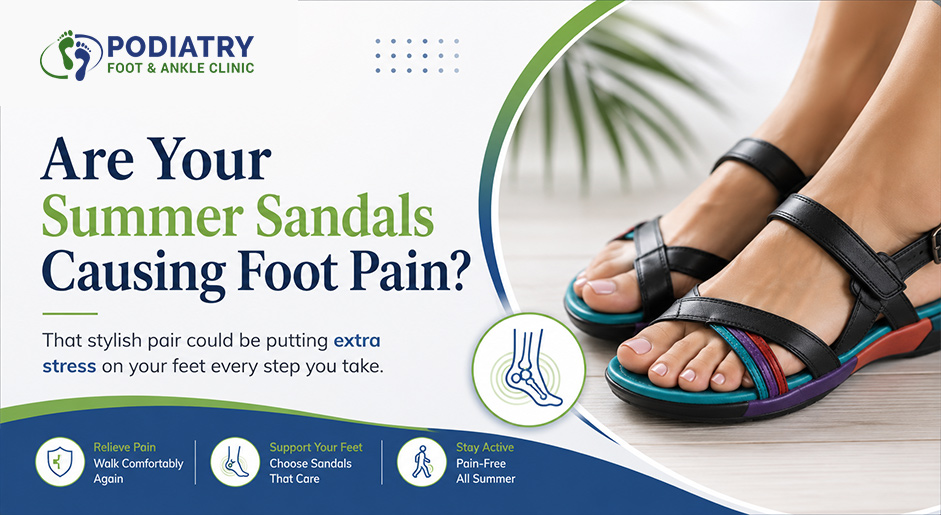
Are Your Summer Sandals Causing Foot Pain
Summer means longer walks, beach vacations, outdoor events, and of course, your favorite sandals. They feel light, stylish, and perfect for warm weather. But what many people don’t realize is that the sandals they wear every day could be the hidden reason behind their foot pain.
At Podiatry Foot & Ankle Clinic, we frequently see patients who believe their heel pain or sore arches developed “out of nowhere.” In reality, their footwear is often one of the biggest contributing factors.
Whether you’re wearing flip-flops, slides, fashion sandals, or flat slip-ons, choosing the wrong footwear can gradually place stress on your feet. That stress may eventually lead to chronic pain, inflammation, tendon injuries, or even problems affecting your knees, hips, and lower back.
Can Wearing Summer Sandals Really Cause Foot Pain?
Yes. Not every sandal is designed to support the natural structure of your feet. Many fashionable sandals are made to look good rather than provide proper support. Thin soles, flat footbeds, loose straps, and poor cushioning force the muscles, ligaments, and tendons in your feet to work much harder than they should.
Every step you take creates pressure throughout your foot. When that pressure isn’t evenly distributed, your body begins to compensate. Over time, even a comfortable-looking sandal can contribute to pain that becomes noticeable after long walks or standing for extended periods.
The longer you wear unsupportive sandals, the more stress your feet absorb.
Why Do My Feet Hurt After Wearing Sandals?
This is one of the most searched questions every summer. If your feet hurt after wearing sandals, it’s usually because your footwear isn’t providing enough support where your feet need it most.
Unlike supportive walking shoes, many sandals lack:
- Proper arch support
- Shock absorption
- Heel stability
- Secure straps
- Cushioning
Without these features, your feet have to stabilize your body on their own. This extra effort places continuous strain on muscles and connective tissues that were never meant to do all the work alone. Pain may start as mild soreness but gradually develop into a more serious condition if ignored.
What Foot Problems Can Poor Sandals Cause?
Your feet are the foundation of your body. When that foundation isn’t properly supported, discomfort doesn’t always stay in your feet.
Poor footwear may contribute to several common foot and ankle conditions.
Rough, Thickened Skin – Plantar warts usually appear as rough, hardened patches of skin on the sole of the foot. They are often mistaken for calluses because of their thick surface.
Pain When Walking or Squeezing – Unlike a callus, a plantar wart often causes pain when pressure is applied from the sides or while walking. Many patients describe the feeling as though they are stepping on a small pebble.
Tiny Black Dots – One of the most recognizable signs of a plantar wart is the presence of tiny black dots. These are actually small clotted blood vessels and are commonly referred to as “wart seeds.”
Interrupted Skin Lines – Healthy skin has natural lines and patterns. Plantar warts disrupt these skin lines, which helps doctors distinguish them from other foot conditions.
How Can You Tell If Your Sandals Are Hurting Your Feet?
Your body usually gives you warning signs long before a serious injury develops.
Pay attention if you regularly notice:
- Heel pain after walking
- Aching arches
- Burning feet
- Tired feet every evening
- Toe cramps
- Pain behind the ankle
- Knee discomfort
- Lower back pain
If these symptoms improve when you switch shoes, your sandals may be the problem.
Instead of choosing sandals based only on appearance, ask yourself a few simple questions.
Do they support your arches?
Do they cushion every step?
Do they stay securely on your feet without your toes gripping?
Can you comfortably walk for an hour without pain?
If the answer is “no” to most of these questions, they’re probably not the best choice for everyday wear.
What Should You Look for in Supportive Summer Sandals?
The best sandals combine comfort with stability. Look for sandals that include:
- Proper arch support
- Cushioned footbeds
- Adjustable straps
- Stable, thicker soles
- Secure heel support
- High-quality materials
- A comfortable fit without squeezing your toes
Good sandals should feel supportive from the moment you put them on.
Are Flip-Flops Bad for Your Feet?
Not necessarily but they aren’t ideal for all-day wear.
Most traditional flip-flops provide very little arch support or cushioning. Because they don’t stay firmly attached to your feet, your toes naturally grip the sandal with every step.
Wearing flip-flops occasionally around the pool or beach is usually fine. However, wearing them for shopping, sightseeing, or long walks can increase stress on your feet and ankles.
When Should You See a Foot and Ankle Specialist?
Foot pain shouldn’t become part of your daily routine. If pain continues for more than a week, returns every time you wear sandals, or begins affecting the way you walk, it’s time for a professional evaluation.
Early treatment often leads to faster recovery and helps prevent more serious problems from developing.
At Podiatry Foot & Ankle Clinic, Dr. Krishna Gathani provides comprehensive diagnosis and treatment for foot and ankle conditions affecting both children and adults.
Whether you’re experiencing heel pain, plantar fasciitis, bunions, tendon injuries, ankle pain, diabetic foot concerns, or sports-related injuries, our goal is to identify the root cause of your discomfort and create a treatment plan that’s right for you.
Healthy feet make everyday life easier—and we’re here to help you stay active and pain-free.
Frequently Asked Questions (FAQs):
Can wearing summer sandals every day cause foot pain?
Yes, wearing summer sandals every day can cause foot pain if they don’t provide proper arch support, cushioning, or stability. Flat sandals and flip-flops force your feet to work harder while walking, which may lead to heel pain, arch pain, plantar fasciitis, tendon strain, and foot fatigue. Choosing supportive sandals can help reduce stress on your feet and improve overall comfort.
Why do my feet hurt after wearing sandals for a few hours?
If your feet hurt after wearing sandals for a few hours, your footwear may not be providing enough support. Many sandals lack proper cushioning and arch support, causing extra pressure on your heels, arches, and toes. This repeated strain can make your feet feel sore, tired, or swollen, especially after long walks or standing for extended periods.
Can flat sandals or flip-flops cause heel pain?
Yes. Flat sandals and flip-flops often provide little to no shock absorption or arch support. As a result, every step places additional pressure on your heels and the bottom of your feet. Over time, this can contribute to heel pain, plantar fasciitis, Achilles tendon discomfort, and overall foot fatigue.
How can I tell if my sandals are causing my foot pain?
Your sandals may be causing foot pain if you notice discomfort only while wearing them or shortly afterward. Common signs include heel pain, aching arches, sore toes, tired feet, or pain that improves when you switch to supportive footwear. If the pain continues despite changing shoes, it’s a good idea to consult a podiatrist.
Are expensive sandals always better for foot health?
Not necessarily. The price of a sandal does not always reflect its level of support. Some expensive fashion sandals offer very little arch support, while many podiatrist-recommended sandals are specifically designed to promote healthy foot alignment. Focus on comfort, stability, cushioning, and support rather than price alone.
What should I do if my sandals are causing foot pain?
Can supportive sandals help relieve heel pain?
Supportive sandals may help reduce heel pain by improving foot alignment and reducing pressure on the heel. If the pain doesn’t improve, Podiatry Foot & Ankle Clinic can recommend personalized treatment options.