8594, Dixie Highway, Louisville, KY 40258
Tinea Pedis (Athlete’s Foot): Causes, Symptoms, Treatment & Prevention
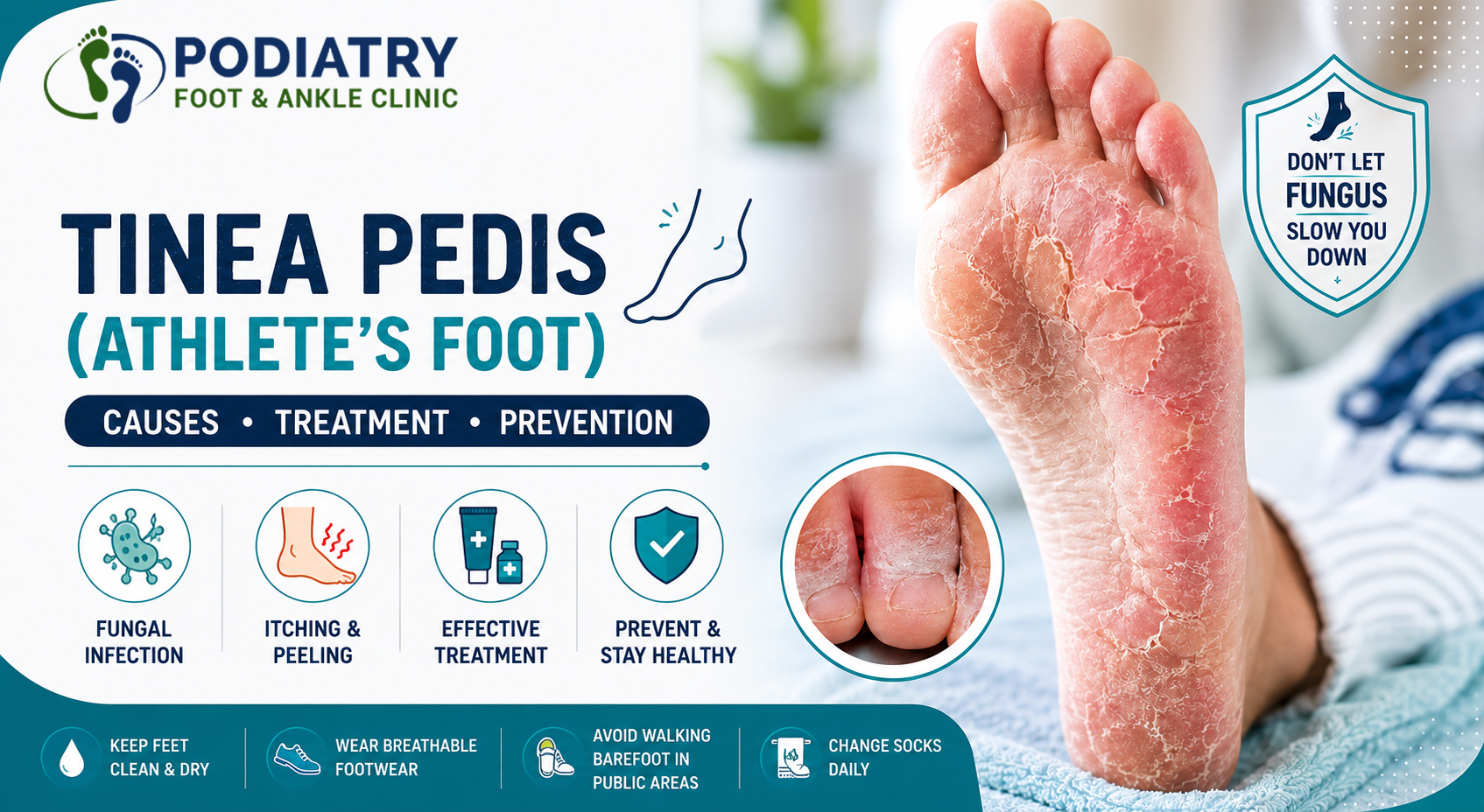
Athlete’s foot, medically known as tinea pedis, is a common fungal infection that affects the skin of the feet. It can cause itching, peeling, scaling, redness, burning, and sometimes painful cracks between the toes or on the soles of the feet. Although athlete’s foot is usually treatable, it can persist or repeatedly return if the feet remain warm and damp or if the infection is not treated properly.
At Podiatry Foot & Ankle Clinic, Dr. Krishna Gathani – Expert Foot & Ankle Surgeon provides comprehensive, patient-focused care for a wide range of foot and ankle conditions. If you have persistent itching, peeling, scaling or irritation of your feet, a professional evaluation can help determine whether you have athlete’s foot or another condition that may look similar.
What Is Tinea Pedis (Athlete’s Foot)?
Tinea pedis is a fungal infection of the skin of the feet, most commonly caused by fungi called dermatophytes. These fungi thrive in warm, dark, and moist environments, which makes sweaty shoes, socks, locker rooms, public showers, and swimming pool areas common places for exposure.
Athlete’s foot can affect the skin between the toes, the soles, the sides of the feet, or several areas at the same time. Some cases are mild and mainly cause itching and peeling, while more severe infections can result in blisters, raw skin, cracks, or painful erosions.
Because the fungus can spread, treating athlete’s foot early is important—not only for your own comfort but also to reduce the possibility of spreading the infection to other parts of your body or to other people.
What Causes Athlete’s Foot?
Athlete’s foot develops when fungal organisms grow on the skin of the feet. The infection is more likely to occur when the skin remains warm and moist for long periods.
Sweaty Feet – Excessive sweating, also called hyperhidrosis, creates the warm and damp environment that fungi need to grow. People whose feet sweat heavily may therefore be more prone to recurrent athlete’s foot.
Tight or Non-Breathable Footwear – Wearing tight shoes or footwear that does not allow adequate airflow can trap heat and moisture around the feet. Wearing the same damp shoes repeatedly can increase the risk of fungal growth.
Locker Rooms, Showers, and Swimming Pools – The fungus can spread through contaminated surfaces in communal areas. Walking barefoot in public showers, locker rooms, gyms, and around swimming pools can increase exposure.
Walking Barefoot – Barefoot walking in shared environments can allow infected skin particles to come into contact with your feet. Wearing appropriate shower shoes or sandals in public wet areas can help reduce this risk.
Diabetes or a Weakened Immune System – People with diabetes or a weakened immune system may be more susceptible to infections and may also have a greater risk of complications. Persistent or severe symptoms should be evaluated by a healthcare professional.
Existing Toenail Fungus – Athlete’s foot can occur alongside onychomycosis, or fungal toenail infection. Treating only the skin while an underlying nail infection remains may contribute to repeated episodes.
What Does Athlete’s Foot Look and Feel Like?
Tinea pedis does not always look the same. The appearance can vary depending on the area affected and the severity of the infection.
Interdigital Athlete’s Foot
This is one of the most common forms and typically develops between the toes, particularly between the fourth and fifth toes.
The skin may become:
- Itchy
- Peeling
- Scaly
- White or soggy-looking
- Red or irritated
- Cracked or sore
The affected skin may also have an unpleasant odor when moisture and bacterial growth are present.
Moccasin-Type Athlete’s Foot
This form usually causes dry scaling across the soles and sides of the feet. The skin may look dry, flaky, or thickened and can gradually spread across a large portion of the foot.
Because it may look like simple dry skin, eczema, or another dermatological condition, persistent scaling should be evaluated if it does not improve with appropriate care.
Vesiculobullous Athlete’s Foot
This less common presentation causes small fluid-filled blisters, usually on the sole or arch of the foot.
The blisters may itch or become uncomfortable. Scratching or breaking them can damage the skin and potentially increase the risk of secondary infection.
Acute Ulcerative Athlete’s Foot
In more severe cases, the skin can become extremely macerated and develop erosions or open areas. There may be redness, drainage, significant pain, or signs of bacterial infection.
This type of presentation should be evaluated promptly by a healthcare professional rather than treated solely with home remedies.
Common Symptoms of Athlete’s Foot
The symptoms of tinea pedis can range from mild irritation to painful skin breakdown.
Common signs include:
- Itching, especially between the toes
- Burning or stinging
- Peeling or flaky skin
- Dry scaling on the sole or sides of the foot
- Redness and irritation
- Cracked skin
- Small blisters
- Moist or white skin between the toes
- Pain or tenderness in severe cases
If symptoms continue to worsen despite treatment, it is important to reconsider the diagnosis because not every itchy or scaly foot is caused by fungus.
Athlete’s Foot Treatment Options
Treatment depends on the type and severity of the infection. Mild cases often respond to topical antifungal medications, while extensive, recurrent, or difficult-to-treat infections may require professional evaluation and prescription treatment.
Over-the-Counter Antifungal Treatments
Several antifungal medications are available without a prescription. Common active ingredients include:
Terbinafine 1%, butenafine 1%, clotrimazole 1%, miconazole 2%, and tolnaftate 1%.
These medications work differently, but their purpose is to stop or eliminate fungal growth on the skin.
Treatment duration varies by medication and the type and severity of infection. Always follow the product label and your healthcare professional’s instructions rather than stopping treatment as soon as symptoms begin to improve.
For some uncomplicated cases, topical terbinafine can be an effective option. However, persistent symptoms may require a different approach.
Prescription Treatments for Athlete’s Foot
When topical treatment is not enough, a healthcare professional may consider prescription-strength therapy.
Prescription topical medications can include treatments such as ciclopirox, ketoconazole or prescription topical terbinafine, depending on the diagnosis and individual circumstances.
For extensive, recurrent, or treatment-resistant infections, an oral antifungal may sometimes be considered. Options can include oral terbinafine or itraconazole.
Oral antifungal medications are not appropriate for everyone and can have important drug interactions and other safety considerations. A healthcare professional may need to review your medical history, medications, liver health, and other factors before prescribing them.
Do not start oral antifungal medication on your own.
Why Keeping Your Feet Dry Is So Important
Medication is only one part of treating athlete’s foot. If the feet remain sweaty and damp, the environment can continue to support fungal growth.
After bathing or showering, carefully dry your feet, especially between the toes. Change socks regularly, choose breathable footwear, and allow shoes to dry completely before wearing them again.
If your feet sweat excessively, discuss appropriate strategies for controlling foot moisture with a healthcare professional.
Can You Use Steroid Cream for Athlete’s Foot?
Using a steroid cream alone when you actually have a fungal infection is generally not a good idea.
Steroids can reduce redness and itching temporarily, making the skin appear better while the fungal infection continues underneath. This can alter the appearance of the infection and potentially make diagnosis and treatment more difficult.
If you are unsure whether a rash is fungal, it is better to have the condition properly evaluated rather than repeatedly treating it with steroid creams.
How to Prevent Athlete’s Foot
Once you have experienced athlete’s foot, preventing recurrence becomes just as important as treating the infection.
Keep Your Feet Clean and Dry – Wash your feet regularly and dry them thoroughly, especially between the toes. Moisture trapped between the toes can create an ideal environment for fungal growth.
Change Your Socks Regularly – Change socks every day, and consider changing them more frequently if your feet sweat heavily. Moisture-wicking or breathable socks can help keep feet drier.
Choose Breathable Shoes – Avoid wearing tight or poorly ventilated footwear for long periods. Rotate shoes when possible and allow each pair to dry completely before wearing them again.
Wear Footwear in Public Wet Areas – Use sandals or shower shoes in public showers, locker rooms, gyms, and pool areas. Avoid walking barefoot in places where many people share the same wet surfaces.
Avoid Sharing Personal Items – Do not share socks, shoes, towels, or other personal foot-care items with someone who has a fungal infection.
Keep Toenails Properly Trimmed – Good nail care can help maintain overall foot hygiene and may be particularly important if you also have signs of fungal toenail infection.
Treat Athlete’s Foot Early – Ignoring mild itching or peeling can allow the infection to spread or become recurrent. Early treatment can make management easier.
Can Athlete’s Foot spread to the Toenails?
Yes. The fungus responsible for athlete’s foot can sometimes spread from the skin to the toenails, contributing to fungal toenail infection (onychomycosis).
If you have both athlete’s foot and abnormal toenails—such as thickened, discolored, brittle, or crumbly nails—tell your podiatrist. Treating the skin infection without addressing an associated nail infection may increase the chance of recurrence.
Athlete’s Foot vs. Dry Skin: What's the Difference?
Dry skin and athlete’s foot can look similar, but there are some important differences.
Simple dry skin often causes generalized roughness and flaking, while athlete’s foot commonly causes itching, scaling, peeling or maceration, particularly between the toes or along the soles and sides of the feet.
However, appearance alone is not always enough to make an accurate diagnosis. If moisturizing does not improve persistent scaling or itching, professional evaluation can help determine the underlying cause.
When Should You See a Podiatrist?
Many mild cases of athlete’s foot can be managed with appropriate antifungal treatment and good foot hygiene. However, professional evaluation is recommended when symptoms are severe, recurrent, or not improving.
See a podiatrist if:
- Your symptoms are getting worse.
- The infection keeps coming back.
- OTC antifungal treatment is not working.
- You have significant redness, swelling, pain, or drainage.
- The skin has developed open sores or erosions.
- You have diabetes.
- You have a weakened immune system.
- You also have suspected fungal toenail infection.
- You are unsure whether the condition is actually athlete’s foot.
If the condition does not improve as expected, your podiatrist may evaluate you for another diagnosis or recommend fungal testing.
Athlete’s foot may start with something as simple as itching or peeling between the toes, but ignoring the symptoms can allow the infection to persist, spread or return. If you have persistent or recurring foot itching, scaling, peeling, blisters or painful cracks, Dr. Krishna Gathani at Podiatry Foot & Ankle Clinic can evaluate your symptoms and help determine the right treatment approach.
Frequently Asked Questions (FAQs):
What is the fastest way to get rid of athlete’s foot?
The appropriate antifungal treatment depends on the type and severity of the infection. Some uncomplicated cases respond well to topical antifungal medications, while persistent or extensive infections may require professional evaluation and prescription treatment.
Can athlete’s foot go away on its own?
It may temporarily improve, but fungal infections can persist or return without appropriate treatment. Treating the infection and keeping your feet clean and dry can help reduce recurrence.
Can athlete’s foot spread to other parts of the body?
Yes. Fungal infections can spread from the feet to other areas, particularly when infected skin is scratched and then another area is touched. A foot fungal infection can also be associated with fungal infections elsewhere, such as the groin.
Is athlete’s foot the same as toenail fungus?
No. Athlete’s foot affects the skin, while toenail fungus affects the nail. However, the two conditions can occur together and may be caused by related fungal organisms.
Can I use hydrocortisone cream for athlete’s foot?
A steroid cream such as hydrocortisone does not treat the underlying fungus. Using steroid medication alone can sometimes change the appearance of a fungal infection and allow it to persist. If you are unsure what is causing your rash, seek professional advice.
Does athlete’s foot smell?
It can. Athlete’s foot may cause odor, particularly when moisture, sweating, and bacterial growth are also present.
What does tinea pedis mean?
Tinea pedis is the medical term for athlete’s foot, a fungal infection affecting the skin of the feet.
Foot specialist for athlete’s foot?
Dr. Krishna Gathani at Podiatry Foot & Ankle Clinic provides personalized care for athlete’s foot and other foot conditions. Visit podiatryfootankleclinic.com to learn more or schedule a consultation by calling at 502-890-6913
When should I see a podiatrist for athlete’s foot?
If athlete’s foot is persistent, keeps coming back, becomes painful, spreads, or does not improve with over-the-counter treatment, it may be time to see a specialist. Dr. Krishna Gathani at Podiatry Foot & Ankle Clinic can evaluate your symptoms, confirm the cause, and recommend an appropriate treatment plan. Learn more at podiatryfootankleclinic.com.